
Garden Advice · Bulgaria
Best Weed-Suppressing Plants for Gardens in Bulgaria
A practical guide to choosing groundcover, shrubs and planting strategies that reduce weeds without turning your garden into another maintenance project.
Bulgaria Landscaping expert garden guide
Quick answer:
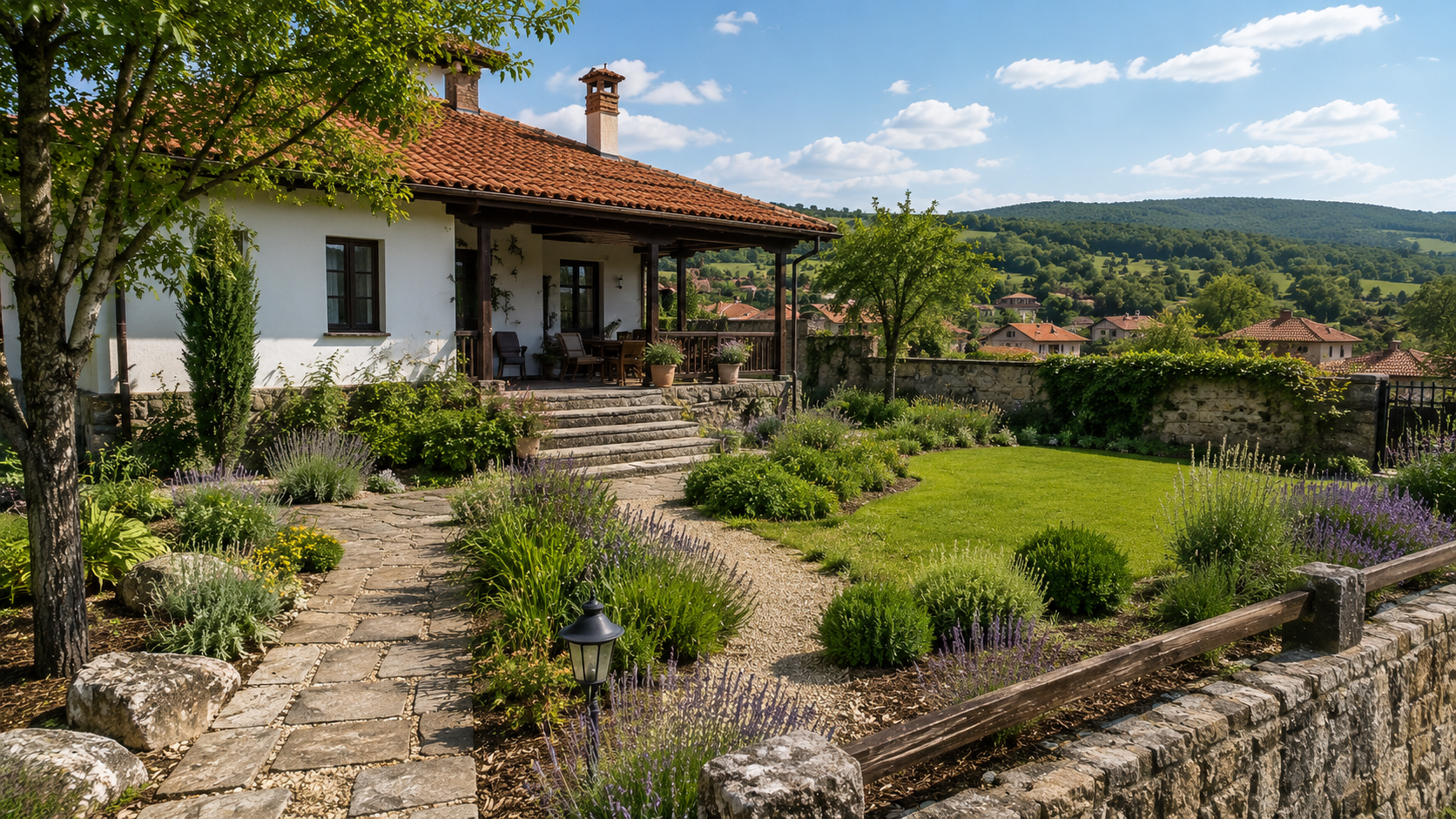
The best weed-suppressing plants for Bulgarian gardens are plants that suit the exact conditions of the site and eventually form a dense, continuous cover.
For dry shade and areas beneath mature trees, zdravets, Geranium macrorrhizum, is one of the strongest choices. Vinca minor can give evergreen cover in suitable shaded and partly shaded areas. Creeping thyme and low-growing sedums belong in sunny, well-drained ground. Creeping juniper is better for larger banks and slopes where you want permanent evergreen coverage.
A weed-suppressing garden starts with the right expectation
If somebody promises you a plant that will make weeds disappear forever, be suspicious.
Plants do not work like herbicide. They suppress weeds by occupying the space that weeds would otherwise use. Their leaves reduce the amount of light reaching the soil. Their roots compete for moisture and nutrients. As the plants spread, fewer open gaps remain where new weed seedlings can establish.
That means the result improves with time. A newly planted bed with young plants and wide gaps between them is still an open invitation to weeds. A mature bed where the foliage has closed over the soil is a very different environment.
The principle we use:
Do not ask, “Which plant kills weeds?” Ask, “Which plant will form the healthiest, densest cover in this exact part of my garden?”
That change in thinking is important. The right plant in the wrong place becomes weak, sparse and high-maintenance. A plant that suits the site becomes the weed-suppressing system.
This matters particularly on Bulgarian village properties. Many gardens contain mature walnut, plum, cherry, apple or other fruit trees, sunny banks, areas of compacted soil, old vegetable plots, awkward corners, dry boundaries and large sections of land that nobody wants to strim every two weeks.
Those areas should not all be planted in the same way.
Before choosing a plant, read the garden
The most expensive landscaping mistakes usually happen before the first plant goes into the soil. Someone sees a plant in a nursery, likes it, buys twenty of them and only later discovers that the garden conditions do not suit it.
Take ten minutes and look at the area properly first.
1. How much direct sun?
Full summer sun and dry shade underneath a walnut tree are completely different environments. Creeping thyme wants light. Zdravets can tolerate shade that would make thyme weak and thin.
2. What happens after heavy rain?
If water remains standing, drainage is the first problem to solve. Plants that love dry, free-draining soil will not perform properly in wet compacted ground.
3. How dry is the soil in July?
Do not judge the site only in April. Look at how it behaves during the hottest part of summer. Soil underneath established trees can become surprisingly dry because the tree roots take a large share of the available moisture.
4. How large is the area?
Twenty square metres beside the house can justify dense ornamental planting. Two thousand square metres behind a village property requires a completely different economic strategy.
Sun is only half the story
Two areas receiving the same amount of sun can still behave differently. One may have loose, stony soil where water drains immediately. Another may have heavy clay that stays wet after spring rain and then bakes hard later in summer.
This is why we avoid recommending plants from photographs alone. A successful planting plan starts with the site, not with the plant catalogue.
Professional tip
Before planting a large area, test a smaller section first. Watch it through one hot period and one wet period. A successful ten-square-metre trial can save a great deal of money before you repeat the planting across a large property.
Five reliable types of groundcover to consider
These are not the only choices available, but they cover several of the most common situations we see in Bulgarian gardens: dry shade, ordinary shade, hot sun, very dry ground and difficult banks.
| Plant | Best use | Light | Water once established | Main warning |
|---|---|---|---|---|
| Zdravets Geranium macrorrhizum |
Under trees, dry shade, shaded boundaries | Sun to shade | Low to moderate | Avoid waterlogged soil |
| Vinca minor | Evergreen cover, shade, slopes | Sun to partial shade | Moderate | Can spread beyond its intended area |
| Creeping thyme | Sunny edges, gravel, dry banks | Full sun | Low | Does not tolerate wet soil |
| Low-growing Sedum | Very dry, sunny, shallow or rocky areas | Full sun | Very low | Not a solution for deep shade |
| Creeping juniper | Large sunny banks, slopes, permanent evergreen cover | Sun to light shade | Low | Slow to give complete coverage |
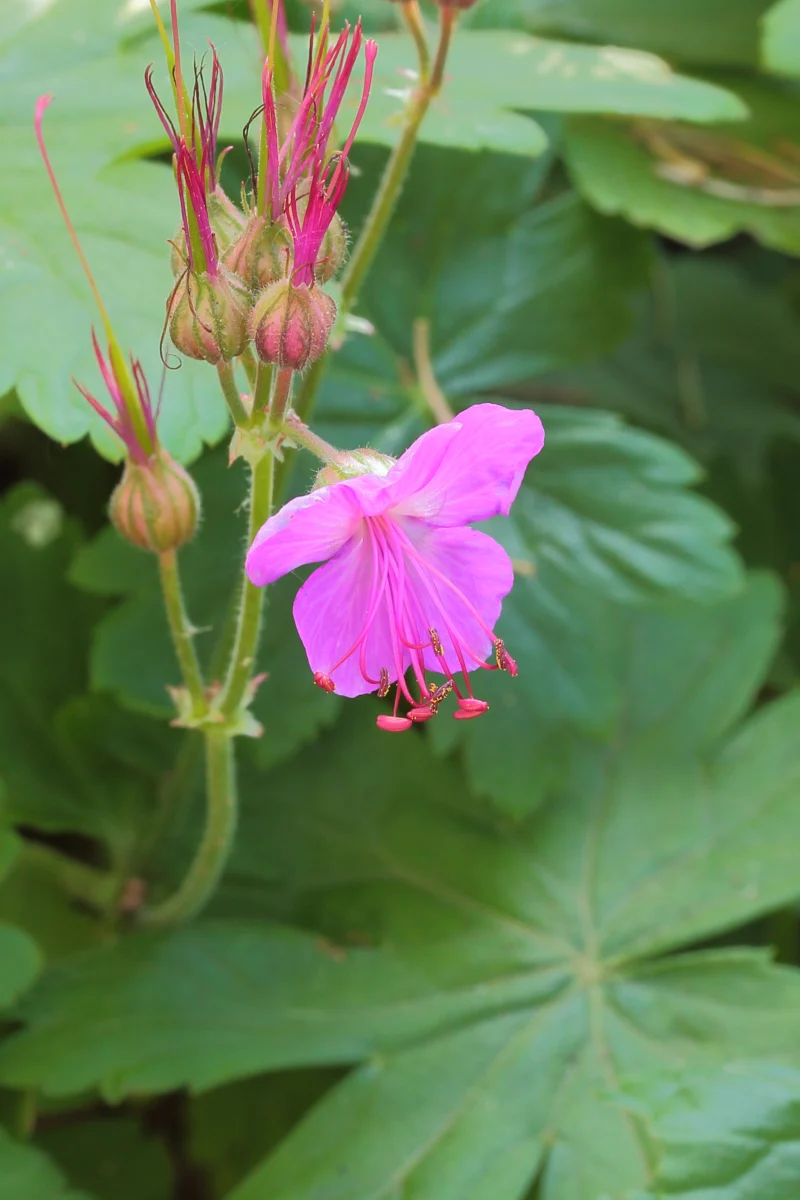
01 · ONE OF OUR FIRST CHOICES FOR DRY SHADE
Zdravets, Geranium macrorrhizum
Dry shade and trees
Dense, mat-forming
Most, if drained
Very hardy
About 0.5 to 1 m
Low
If you have mature fruit trees, an old hedge, a north-facing boundary or a part of the garden where the lawn becomes thin every summer, zdravets should be high on the list.
The value of Geranium macrorrhizum is not simply that it flowers. Its real strength is the way it grows. It forms a spreading mat of foliage that gradually occupies the open ground. The Royal Horticultural Society lists it as mat-forming, useful as groundcover and unusually tolerant of dry shade.
That last point matters. Shade beneath an established tree is often also dry. The tree canopy intercepts rainfall, while the tree roots compete strongly for the moisture that reaches the soil. Many plants tolerate shade. Far fewer tolerate shade combined with root competition and summer dryness.
Zdravets can.
Where we would use it
We like it underneath deciduous trees, beside hedges, along shaded walls, on the shady side of a house and in awkward strips where grass repeatedly becomes weak.
It can also tolerate sun, but that does not mean it is the best answer for every sunny area. In a hot exposed position, other plants may give a better visual result and require less irrigation.
Soil and drainage
It is not particularly fussy about soil type. Chalk, clay, loam and sandy soils can all work if the root zone drains. The condition we would avoid is permanently wet or waterlogged soil.
If the ground turns into sticky mud after rain and holds water for days, fix that problem first. Putting a tolerant plant into badly drained soil does not turn bad drainage into good drainage.
How quickly will it suppress weeds?
RHS gives an eventual spread of roughly half a metre to one metre, with plants reaching mature size over several years. Do not misunderstand that figure as a planting instruction.
If you place a handful of plants one metre apart and expect a finished carpet next summer, you will spend a long time weeding the open gaps. Closer initial planting costs more but gives faster canopy closure. Wider planting costs less at the beginning but requires patience and more weed control during establishment.
What we would tell a client
If weed reduction is the main goal, budget for enough plants to make the gaps disappear within a reasonable period. Sparse ornamental planting and weed-suppressing planting are not the same design.
First-year care
Do not confuse drought tolerance with “never needs watering.” A newly planted root ball still occupies a small volume of soil. During its first season, especially if spring quickly turns hot and dry, water deeply enough to encourage roots to move into the surrounding soil.
Once the plants are established, the watering requirement drops considerably.
Common mistake
Planting zdravets through couch grass, bindweed or another established perennial weed without clearing the area first is asking the new planting to fight a battle it did not need to fight.
Clear the difficult perennial weeds first. Then plant. Then mulch the open soil while the groundcover closes.
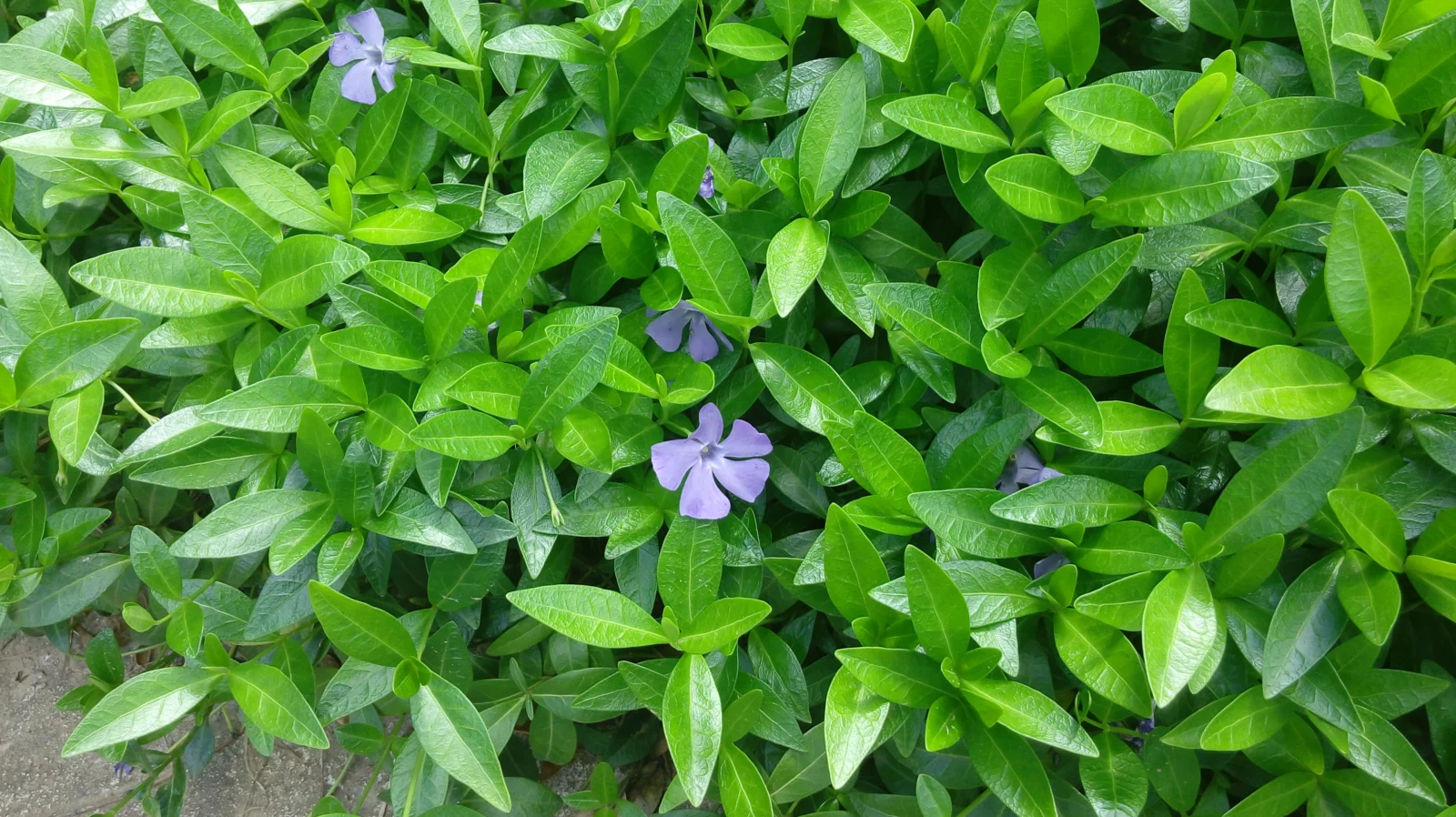
02 · EVERGREEN COVER FOR SHADE AND SLOPES
Vinca minor, useful but not something to plant carelessly
Shade and slopes
Evergreen
Mat-forming
Avoid very dry sites
Around 60 cm
Trim if spreading
Vinca minor, lesser periwinkle, is attractive because it gives something many groundcovers do not: low evergreen foliage through the year.
It forms a mat and can work well underneath shrubs, on shaded banks and in parts of a garden where you want soil covered without maintaining lawn.
The RHS recommends Vinca minor as groundcover and gives around 60 cm spacing as a reference in its groundcover guidance.
That does not mean every site should be planted on an exact 60 cm grid. Plant size, budget and how quickly you want the area to close all matter. But it gives a useful sense of scale.
Where it works
Vinca handles partial shade well and can also flower better with more light. It is adaptable in ordinary garden soil, but it is not the plant we would choose for the driest, hottest, most exposed section of a village property.
If the area receives almost no irrigation and bakes through summer, use a plant adapted to those conditions instead of trying to force Vinca to survive there.
The warning people often forget
A successful groundcover spreads. That is the point. But spreading is only helpful while the plant remains where you want it.
RHS specifically notes that Vinca minor can become a nuisance if it is not managed. So we use it in defined areas where its edges can be seen and controlled, not casually mixed through small beds full of delicate perennials.
Use it with boundaries
A path, wall, lawn edge or substantial shrub border makes Vinca easier to manage. Give a spreading plant a clear territory.
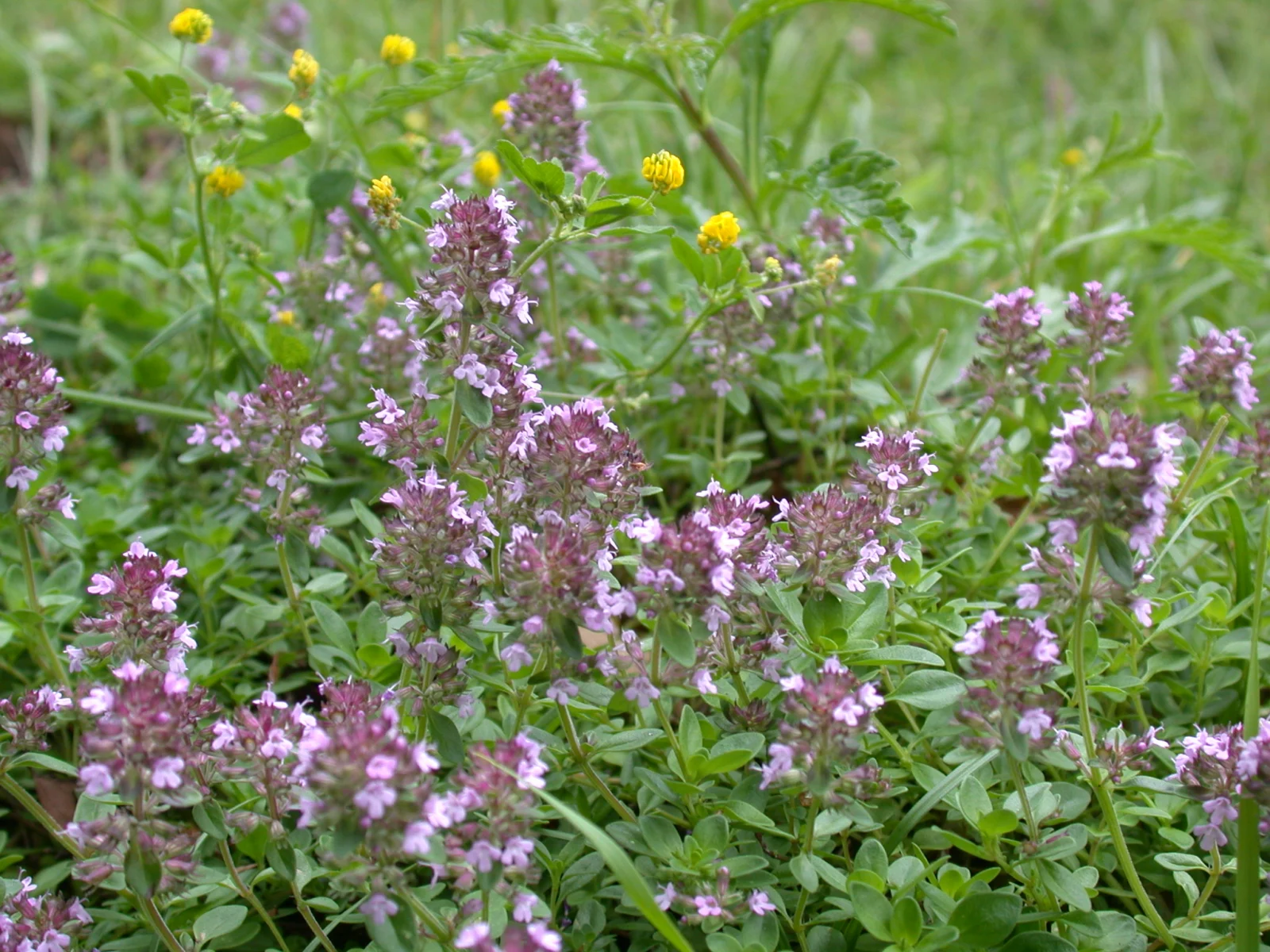
03 · FOR HOT, SUNNY, WELL-DRAINED AREAS
Creeping thyme
Full sun
Free draining
Low once established
Low, spreading mat
Stone and gravel
Wet clay
Creeping thyme belongs in a completely different part of the garden from dry-shade plants.
Give it sun.
It is particularly useful around stone, beside paths, in gravel gardens, on smaller sunny banks and in places where the soil drains quickly. The RHS describes creeping thyme as mat-forming, drought resistant and tolerant of poor soil, but very clear about one limitation: it does not tolerate wet or waterlogged conditions.
That is why thyme can look excellent in one Bulgarian garden and miserable in another only a few kilometres away.
Heavy clay changes the answer
If you push creeping thyme into compacted heavy soil where rain sits around the crown in winter and spring, drought tolerance in July will not save it.
Improve drainage, raise the planting area, add suitable mineral structure, or choose a plant that suits the soil you actually have.
Do not overfeed it
People sometimes assume every struggling plant needs more fertilizer. Thyme is not a plant that needs rich, wet soil. Excess fertility and moisture can encourage soft growth rather than the compact form you want.
Maintenance
A light trim after flowering helps keep creeping thyme compact. Once established in the correct soil, it is one of the lower-maintenance choices in this guide.
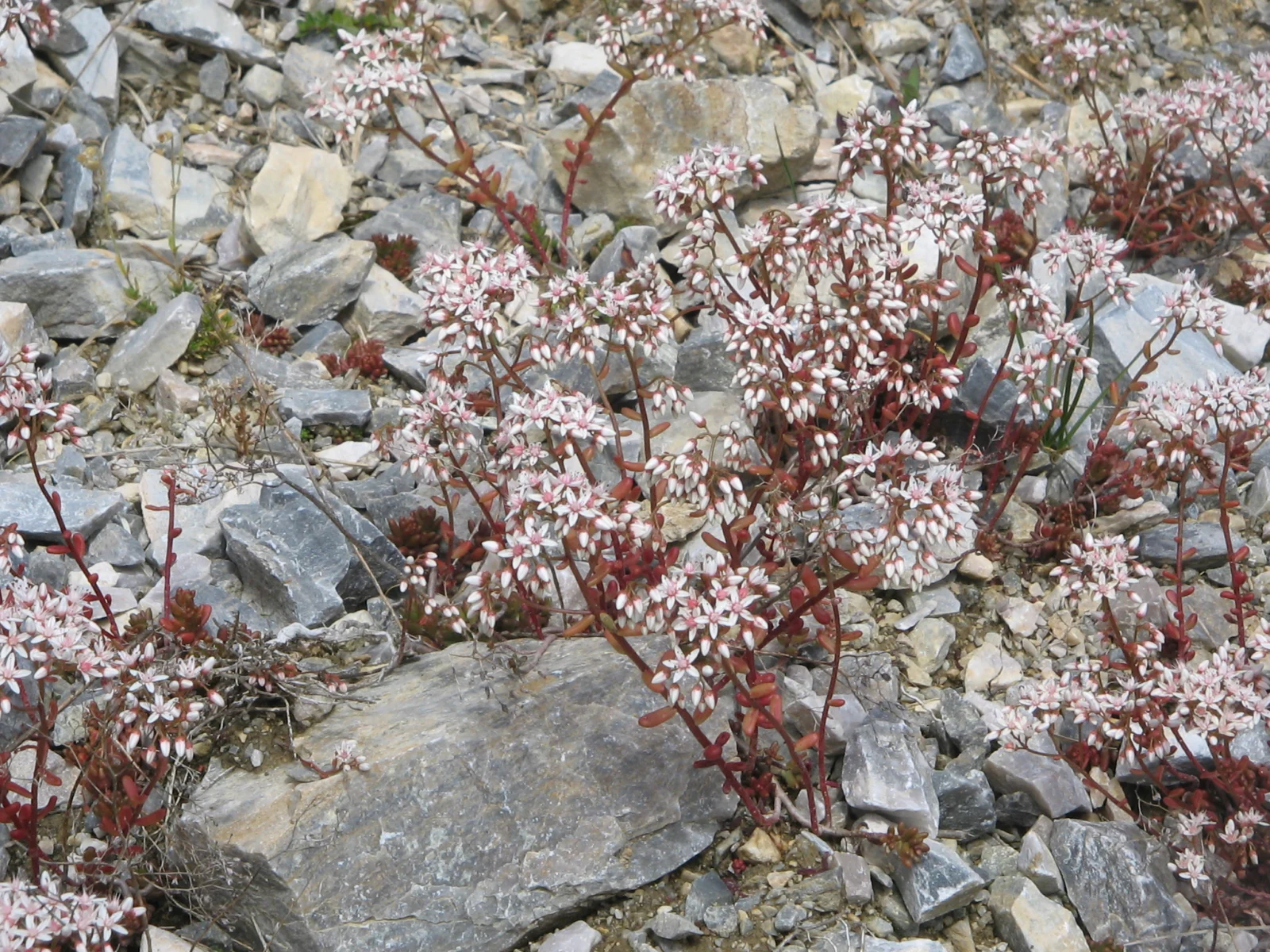
04 · FOR THE DRIEST SUNNY POCKETS
Low-growing Sedum
Full sun
Often around 10 cm
Mat-forming
Well drained
Very tolerant
Selected zones
Low-growing sedums are useful where the garden becomes genuinely dry: shallow soil around stones, sunny edging, rock gardens, exposed pockets and small areas where irrigation is impractical.
Sedum album, white stonecrop, is an example. RHS describes it as a mat-forming evergreen perennial, usually only around 10 cm high, suited to full sun and well-drained soil.
This is a plant for difficult dry spaces, not an excuse to cover a whole property in succulent mats.
Use it where its strengths matter
A one-thousand-square-metre village field does not need sedum. A ten-square-metre dry bank next to stone steps might be perfect.
Good landscaping is partly about knowing where not to spend money.
What it will not tolerate
Deep shade and persistently wet soil work against the reason you chose sedum in the first place. It needs light and drainage.
When placed correctly, it gives very low growth, useful coverage and relatively little ongoing work.
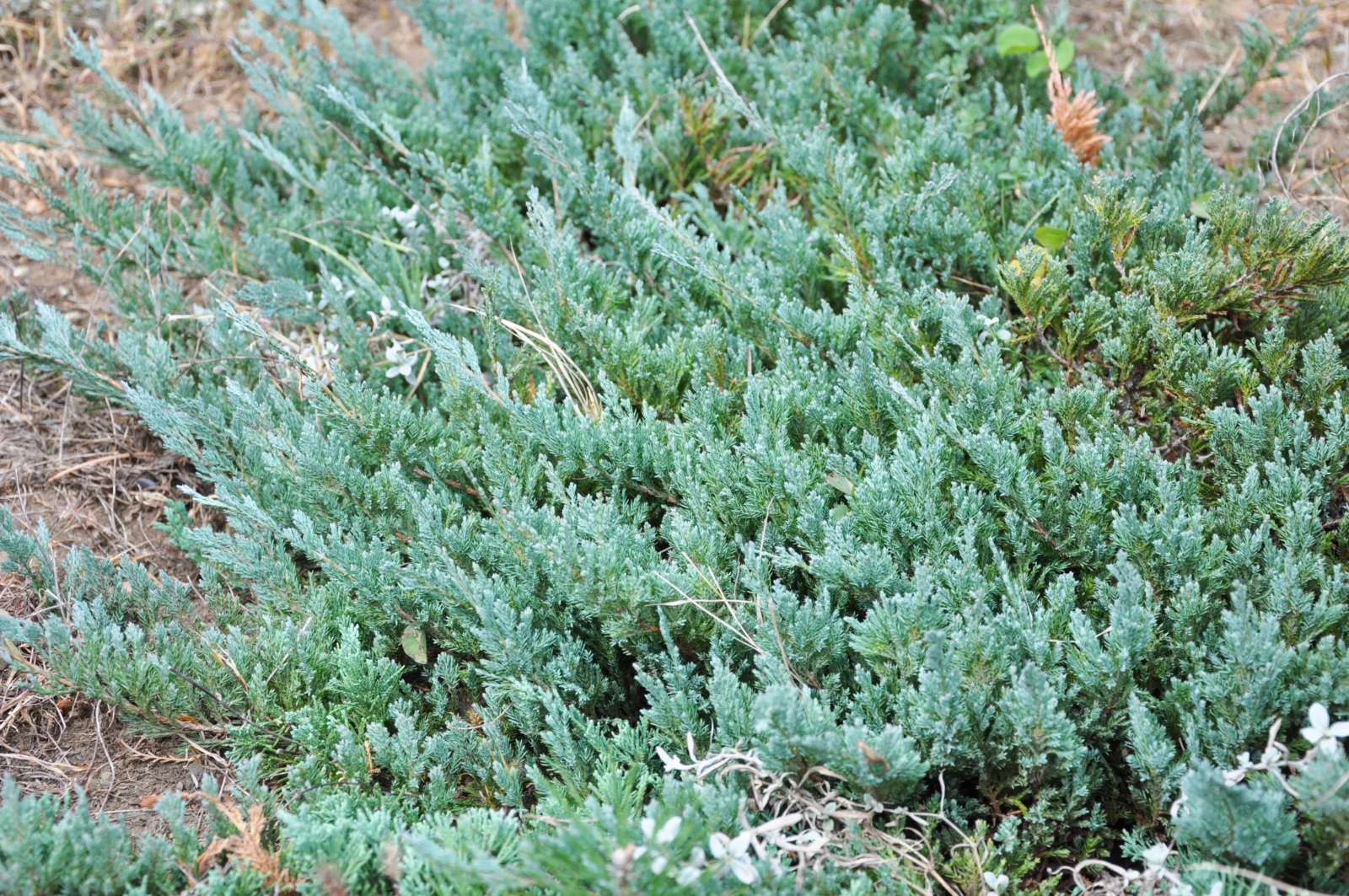
05 · FOR PERMANENT COVER ON BANKS AND SLOPES
Creeping juniper, Juniperus horizontalis
Evergreen
Low, ground-hugging
Several metres
Sun to light shade
Drought resistant
Banks and slopes
Creeping juniper is a different investment. It is a woody evergreen rather than a soft perennial carpet, and it develops slowly compared with many herbaceous groundcovers.
The payoff is permanence.
RHS describes Juniperus horizontalis as a ground-hugging evergreen shrub that can ultimately spread several metres while remaining relatively low. It grows in a wide range of well-drained soils and tolerates drought.
Where it earns its money
Think about a sunny bank that is dangerous or irritating to mow. A slope beside a driveway. A dry section where you want year-round structure. Those are areas where a creeping juniper can make sense.
Do not expect full weed suppression immediately. Young junipers leave a lot of soil exposed between plants. Weed control during establishment is essential.
Think ten years ahead
This is one of those plants where mature spread matters more than the size in the nursery pot. RHS gives a potential mature spread measured in metres and a long establishment period.
Plan where those branches will eventually go. Do not crowd it tightly against paths, drains, walls or delicate neighbouring plants simply because the nursery specimens look small today.
Landscape for the mature plant
Design around the size the plant will become, not the size you carried home from the garden centre.
What should you plant underneath mature trees?
This is one of the most common problem areas in established Bulgarian gardens.
The tree looks healthy, but the lawn underneath becomes thin. Weeds appear in the weak grass. The homeowner adds seed, fertilizer and water. The lawn improves briefly and then deteriorates again.
Often the problem is not a bad lawn. The problem is that we are asking grass to perform in conditions that suit the tree better than the grass.
Trees create several challenges at once
The canopy reduces sunlight. Roots compete for water. Large trees intercept rainfall. Fallen leaves change the surface conditions. Some areas may remain moist in spring but become extremely dry by midsummer.
The answer is not simply “plant something shade tolerant.” You need a plant that tolerates the complete combination.
That is why zdravets is particularly useful in dry shade. Vinca may work where the soil retains more moisture. Other shade-tolerant groundcovers can also be used depending on the specific property.
Do not bury the tree
When improving the area underneath an established tree, avoid piling deep soil or mulch directly against the trunk. The root flare should remain visible and the trunk should not sit inside a wet mound of organic material.
Mulch the wider area, not the bark.
One tree does not equal one planting condition.
The south side of the canopy can be brighter and drier. The north side may stay cooler. Areas close to the trunk can contain dense surface roots. Observe the ground before deciding that one plant must cover the entire circle.
How we would approach a large Bulgarian village garden
A lot of online garden advice becomes useless the moment the property is bigger than a suburban back garden.
If you have 1,500 or 2,000 square metres, the goal should not be to fill every square metre with ornamental groundcover.
That would be expensive to establish and unnecessary to maintain.
Divide the property according to how you actually use it
-
Zone 1, around the house:
This deserves the best planting. You see it every day. Use attractive groundcovers, defined beds, shrubs and mulch. -
Zone 2, underneath mature trees:
Replace failing lawn selectively with plants adapted to shade and root competition. -
Zone 3, banks and slopes:
Reduce dangerous or awkward mowing with spreading groundcover or low shrubs. -
Zone 4, productive areas:
Keep vegetable beds, fruit trees and access paths practical. Do not allow decorative planting to interfere with work. -
Zone 5, large open land:
Keep it mowable or periodically cut unless there is a clear reason to landscape it more intensively.
The biggest mistake is trying to finish the whole property in one season
Start with the twenty percent of the garden creating eighty percent of the work.
Perhaps it is the steep bank you hate strimming. Perhaps it is bare soil under the walnut trees. Perhaps it is the strip beside the terrace that fills with weeds every month.
Fix those areas first.
A village garden becomes easier to manage when each year removes another unnecessary maintenance problem.
What groundcover will not solve
There are situations where planting more plants is not the first answer.
-
Established perennial weeds:
Clear difficult root systems before planting valuable groundcover. -
Bad drainage:
Plants cannot compensate indefinitely for waterlogged soil. -
Compacted construction soil:
Soil preparation may be necessary before anything establishes properly. -
No irrigation during establishment:
Even drought-tolerant plants need time to establish roots. -
Wrong plant in the wrong exposure:
More fertilizer will not turn a shade plant into a sun plant.
Landscaping becomes much easier when you fix the underlying problem rather than trying to hide it with plants.
How to establish weed-suppressing planting properly
Step 1: Clear the area properly
Remove existing perennial weeds, unwanted saplings, debris and thick mats of grass before you start.
If the area is badly overgrown, the first job may be property clearing rather than planting. There is nothing wrong with that. Good planting begins with a manageable site.
Step 2: Improve only what needs improving
Do not automatically replace all existing soil. Good garden soil can often be loosened and improved rather than removed.
If the ground is compacted, open it. If drainage is poor, address drainage. If the soil is extremely poor in organic matter and you are planting plants that benefit from richer soil, incorporate suitable material.
But do not create rich, moisture-retentive soil for plants such as creeping thyme that prefer leaner, freer-draining conditions.
Step 3: Set the correct planting density
There is always a trade-off.
More plants per square metre cost more now and usually give faster coverage. Fewer plants cost less now but leave open soil for longer.
There is no universal number because species, pot size, expected spread, budget and the speed at which you want closure all differ.
When weed suppression is the main objective, we generally lean toward enough density to close the visible gaps within a sensible period rather than spacing plants as isolated specimens.
Step 4: Mulch the open soil
Groundcover does not cover the ground on planting day. Mulch helps during that transition period.
It reduces exposed soil, slows moisture loss and makes it harder for new weed seedlings to establish while the plants grow together.
Keep mulch away from plant crowns and tree trunks. More mulch is not automatically better.
Step 5: Water deeply during establishment
Frequent shallow watering encourages shallow roots. When possible, water thoroughly enough for moisture to penetrate into the root zone, then allow the soil conditions appropriate for that plant to return before watering again.
How often depends on soil, weather, plant species and exposure. A sandy sunny bank dries far faster than shaded clay.
Step 6: Weed early
Do not wait until a weed is one metre high and producing seed.
The easiest weed to remove is the young one you notice while checking the new planting. The first season deserves more attention. Once the groundcover matures, the workload should decline.
When should you plant?
Spring
Spring is a good establishment period when the soil has warmed but the full summer heat has not arrived.
The advantage is a long growing season ahead. The disadvantage is that a late-planted area can move almost immediately into hot weather, which increases irrigation demand.
Early autumn
Early autumn can be excellent because the soil is still warm while air temperatures begin to moderate.
The objective is to give roots enough time to establish before hard winter conditions. Do not leave large planting projects until the soil is already cold and growth has stopped.
Avoid unnecessary stress
If you have no reliable irrigation, establishing a large new groundcover bed just as a prolonged Bulgarian summer heatwave begins is making the job unnecessarily difficult.
The mistakes we would avoid
- Planting groundcover directly into established perennial weeds.
- Choosing plants because they look good in the nursery rather than because they suit the garden.
- Putting drought-loving plants into wet clay.
- Planting shade plants on an exposed south-facing bank.
- Planting so sparsely that weeds dominate for years.
- Assuming drought tolerance means a new plant never needs watering.
- Covering the whole village property with expensive ornamental planting when most of it can remain mowable.
- Allowing spreading plants such as Vinca to move into areas where they are not wanted.
- Piling mulch against tree trunks.
- Buying fast-growing invasive plants because somebody says they will “take over and stop the weeds.”
Be careful with aggressive and invasive plants
The fact that a plant spreads quickly does not automatically make it good groundcover.
Bulgaria’s Ministry of Environment and Water lists a number of invasive alien plants that can spread from cultivation and become environmental problems, including Acer negundo and Amorpha fruticosa.
Do not introduce an aggressive tree or shrub simply because you have heard that “nothing grows underneath it.”
You are trying to reduce a maintenance problem, not create a larger one.
Frequently asked questions
Will groundcover completely eliminate weeds?
No. A dense mature groundcover can substantially reduce weed germination and make maintenance easier, but some weeds will still appear. The best results come from clearing established weeds first, planting at an appropriate density and mulching the open soil during establishment.
What is the best groundcover underneath fruit trees?
There is no single answer for every tree. If the area is dry and shaded, zdravets is one of the strongest candidates. Where the soil retains more moisture, Vinca minor may be suitable. Look at light, root competition and summer dryness before choosing.
What should I plant on a hot sunny bank?
Creeping thyme, low-growing sedums and selected creeping junipers can all work, but they perform differently. Thyme and sedum need excellent drainage. Juniper provides more permanent woody structure and takes longer to fill the area.
Can I plant groundcover directly into weeds?
We would not recommend it. Remove established perennial weeds before planting. Young groundcover plants should spend their energy establishing roots, not competing with an old root system that already occupies the soil.
How close should groundcover plants be planted?
It depends on species, starting pot size, budget and how quickly you want the soil covered. Faster closure usually means buying more plants and spacing them more closely. Wider spacing costs less initially but requires more weed control while the plants spread.
Do trees themselves stop weeds?
Tree shade can reduce some weed growth, but many weeds tolerate partial shade. A better system combines the tree canopy with suitable groundcover and mulch while keeping material away from the tree trunk.
Should I plant my whole village garden with groundcover?
Usually not. On a large property, use groundcover where it provides the most value: around the house, under trees, on difficult slopes and in high-maintenance areas. Keep larger open sections accessible for mowing or periodic cutting.
Which groundcover needs the least water?
For hot sunny sites with good drainage, low-growing sedums, creeping thyme and established creeping junipers can be very drought tolerant. They still need appropriate watering while establishing. For dry shade, zdravets is much better adapted than most sun-loving drought plants.
Sources and horticultural references
Plant choice should always be adjusted to the conditions on the individual property. The horticultural characteristics in this guide are cross-checked against established plant references and Bulgarian environmental information.
-
Royal Horticultural Society: Geranium macrorrhizum
-
Royal Horticultural Society: Vinca minor
-
Royal Horticultural Society: Ground cover plants
-
Royal Horticultural Society: creeping thyme
-
Royal Horticultural Society: Sedum album
-
Royal Horticultural Society: Juniperus horizontalis
-
Royal Horticultural Society: dry shade and weed-suppressing groundcover
-
Bulgarian Ministry of Environment and Water
Plant performance varies with local soil, elevation, exposure, irrigation and winter conditions. Assess the property before undertaking large-scale planting.
Have a difficult or overgrown garden?
If the first job is clearing an overgrown property, preparing difficult ground or deciding which areas should remain lawn and which should become lower-maintenance planting, Bulgaria Landscaping can help.
We work with gardens and village properties in Sofia, Pravets, Botevgrad, Etropole and other areas of Central Bulgaria.